
WHAT IS IT LIKE TO DANCE TANGO IN LONDON?
What is the London tango scene actually like?
Tango is global, and London is a global city – but that doesn’t mean that there aren’t differences about the London tango scene compared to Argentina, Europe and other places you may have danced. If you’re new to London tango, visiting the city, or wondering what to expect from your first milonga, this guide answers some of the questions we hear most often.
Q. What do you mean in London by a “milonga”, “practica”, “tea dance”, “practilonga” etc?
A. Good question – in London, the definitions are more fluid than in some other places. However, the house style for this site is that:
- a milonga is a social tango event, where dancers do not interrupt the flow of the dance to practice moves or have an impromptu chat. There will be a DJ who curates music for all participants. And broad conventions about social tango will apply.
- a practica may well have more people drifting in-and-out of the dance floor, and while there will be music, this is much less likely to have formal tandas. People may stick with their same partners more. Most follow on from a class.
- a tea dance is a relaxed afternoon milonga, often with refreshments.
- a practilonga is to all intents and purposes a milonga, but deliberately set up to be relaxed about participants trying new things – and maybe getting them wrong.
We try to add one of these words to each listing – so if you’re looking for somewhere to dance either today, this weekend, or at some point in the future, see
Q. Is London a good city for tango?
A. Yes. London has one of the largest tango communities in the UK, with dancing available throughout the week in central London, the suburbs and the surrounding region.
Q. Which London milonga should I try first?
A. There is no single answer. The best first milonga depends on:
- where you live – or at least where you are staying
- whether you are coming alone or with a partner
- how long you have been dancing;
- whether you prefer a relaxed or more traditional atmosphere.
Many dancers simply try several different events before deciding which venues best suit their preferences.
That’s one reason London Milongas does not recommend specific events: what feels perfect for one dancer may not suit another.
Q. Are London milongas ‘cliquey’?
Usually less than newcomers fear. London is an incredibly global city, with a huge amount of migration all the time. There are always new faces, and old faces move on. All London milongas welcome visitors, new dancers and people attending alone.
However, like any long-established social scene, there are groups of friends who know each other well.
The easiest way to become part of the community is simply to keep attending. Familiar faces quickly become friends.
Q. I’m visiting London for a few days. Where should I start?
A. If you’re visiting London, the easiest starting point is usually the On Today and What’s On This Week pages. London has events spread across a large geographic area, so travel times often matter more than the style of milonga itself. Visitors staying in central London will generally find the greatest concentration of events in Zones 1–2.
Q. Do I need a car?
Usually not. Most central and inner-London milongas are accessible by Underground, bus or train. London also has 24h buses, and 24h Underground on some lines on Friday and Saturday nights. Some suburban and out-of-town events are easier by car, particularly those outside Greater London.
The listings for each event have a map, so you can check yourself where the nearest public transport station is.
Q. Are London milongas LGBTI+ positive?
A. Yes they are. You will very frequently see people of all genders leading and following, with others of all genders, and most dancers would consider that entirely unremarkable. A large number of London teachers offer classes on the ‘other role’, and this is to be encouraged.
Having said that, if you are particularly interested in Queer Tango events, then you should get in contact with Queer Tango London, both for their own specialist events (which are of course listed here) and also to find out when they’re next planning a pre-arranged group trip to ‘vanilla’ milongas.
Q. Do I have to dance only as a leader, or only as a follower?
A. No. London tango is generally relaxed about role boundaries. It is entirely normal to see people dancing both roles, and to switch roles (and/or shoes) mid-way through an event – or mid-tanda (ok, probably not frequently switching shoes mid-tanda).
While most people have one role that they feel more comfortable with (probably because that’s how we initially learned), a lot of people know both.
But absolutely no problem if you only want to dance one role all night.
Q. What should I bring to a London milonga?
A. Bring your shoes. Bring your phone. And bring a smile.
Many milongueros also recommend bringing a bottle of water, and a fan. Events involving maybe a hundred (or more) dancing people will tend to become increasingly hot, and the fans/ air-conditioning may or may not cope. But London dancers tend to be quite tolerant of sweat.
Q. What will I need to wear at a London milonga?
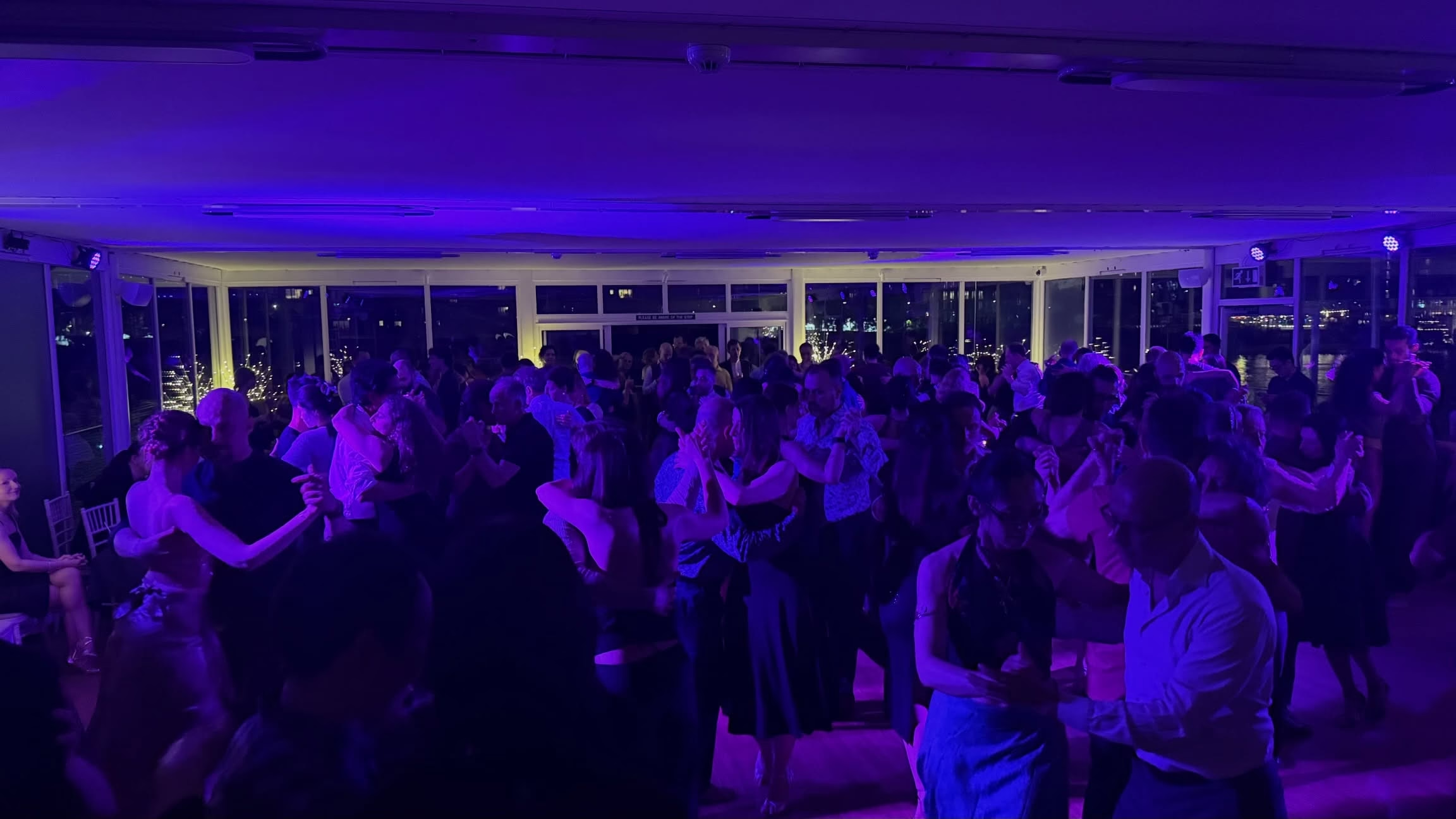
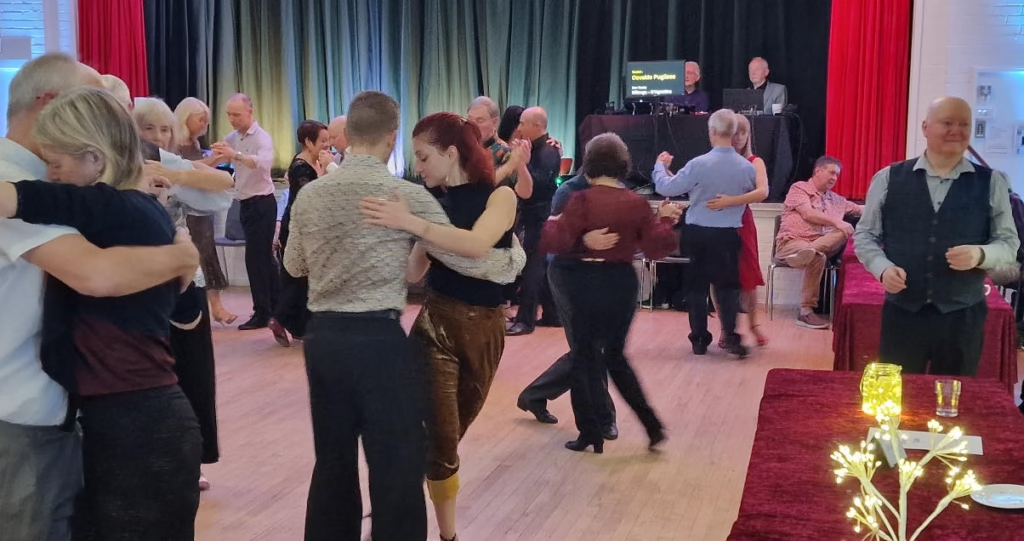
Hopefully the photos on this site will give you a good idea. As you will see, there is no uniform style. You will see everything from jeans and t-shirts to specialist tailoring. The most important thing is that you wear something which is comfortable for you to dance in for several hours – and comfortable for your partner.
As a rough guide:
- the earlier in the day the event takes place, the more informal the ‘dress-code’ will be. However, people will tend to make an effort for evening milongas, especially those that end late on weekend evenings.
- ignore the stereotypes, and do not wear a suit. Even teachers and performers change immediately after demonstrations, because they are simply too hot to dance in.
Two pieces of advice:
- do not wear ‘street-shoes’ if possible. Their soles are not designed for pivoting, and will actively damage your dance. They also may have a protruding welt, which can bash into your partner’s foot and cause pain.
- milongas tend to be hot, and there is a general tolerance for sweat on partners. However, there is no excuse for skimping on deodorant, or poor personal hygiene.
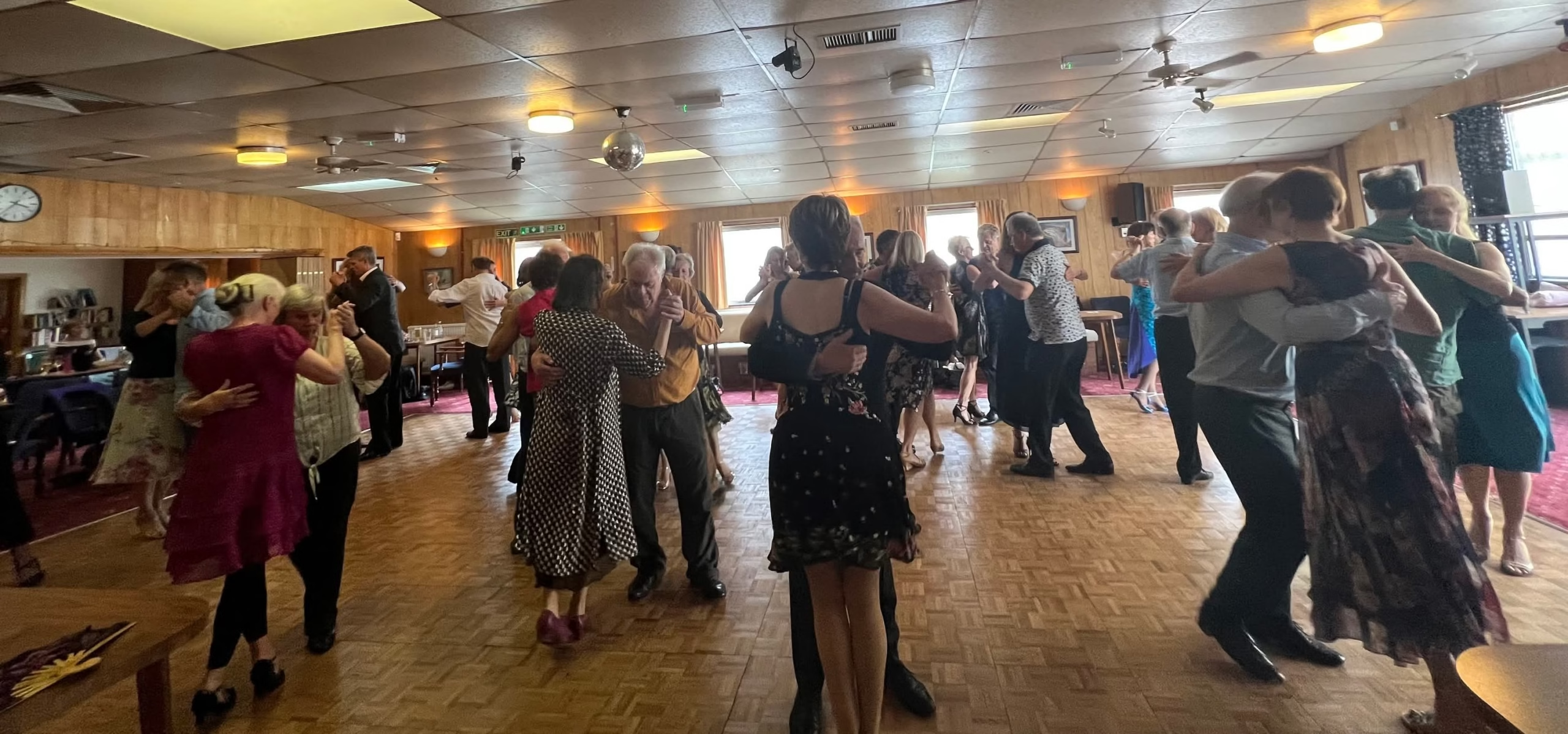
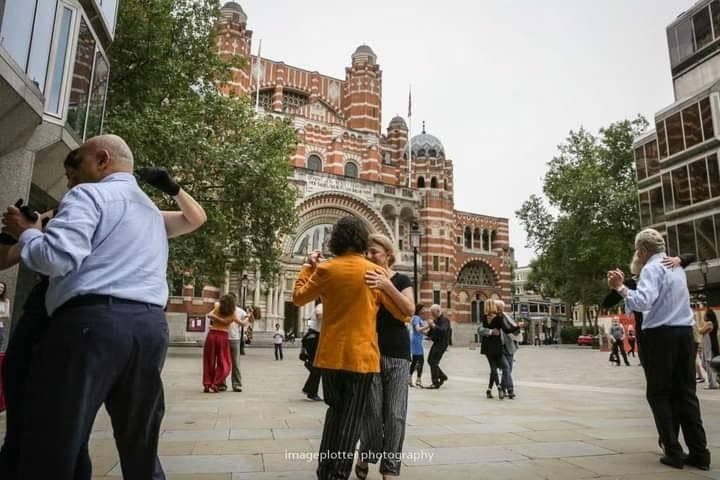
Q. Are London milongas ‘traditional’?
A. Some are, and some are not. London conventions are substantially less formal than Buenos Aires. However, most follow some core points:
- Traditional music, focused on the “Golden Age” of c.1935-1955, played in 4-track tandas in a TTVTTM format. Although there are also lots of DJs who like to break out from this format to incorporate more modern vibes. Check if you care about this.
- Shared tango floor (pista) with constant anti-clockwise flow of couples. The quality of London floorcraft is sometimes variable; as is the speed of progress around the room.
- Disapproval of flashy moves (especially involving high voleos) except in relatively empty spaces, and to more modern music.
- General – but by no means universal – use of cabeceo and mirada for people to secure dances.
However, very few events have rigid rules. Gender-segregated seating never happens. New couples often join the floor mid-tanda. Lane discipline is variable.
Most London dancers attend a variety of different events depending on what they are looking for on a particular night.
Q. Do I need to buy tickets in advance?
A.Usually not. Most London milongas operate on a first-come, first-served basis.
However, some larger events will offer tickets in advance, if they think they will be at-capacity (eg due to venue safety restrictions) particularly:
- special events with featured international stars;
- festivals;
- New Year celebrations;
- anniversary milongas;
- events where food is being served.
If reservations are required, organisers will normally say so clearly in advance.
Q. Will I need to reserve a table?
A. Honestly, most milongas do not even offer specific tables. But some of the larger weekend events will have the option of reserving a table for a group (eg for all students of a particular teacher).
Q. Can I dance with the same partner all night?
A. Of course you can – if your partner agrees. You are both consenting adults.
Nobody is obliged to dance with anyone else. Some couples dance exclusively with each other. Others dance with many different partners. Both approaches are entirely normal in London.
Q. Can I attend a milonga alone?
A. Most definitely. It’s hard to know what proportion of London dancers arrive alone – but it’s surely the majority. Turning up by yourself is entirely normal and nobody will think anything of it.
Q. What languages will dancers in London speak?
A. English, obviously, is the lingua franca. However, we get visitors from around the world, so you’ll find Spanish, French, Italian, German, Polish, Russian, Mandarin, Tagalog… But English is best for small-talk between songs… a menos que sepas que tu pareja prefiera el chamuyo en castellano.
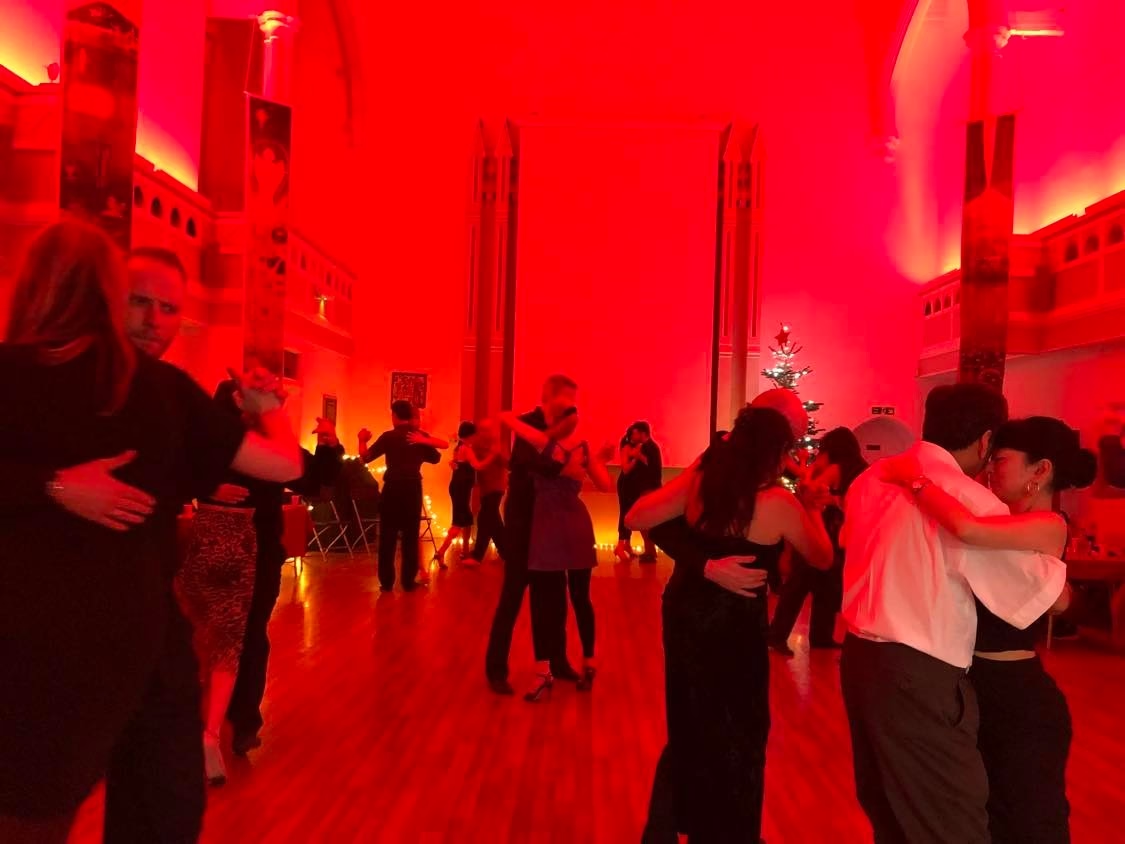
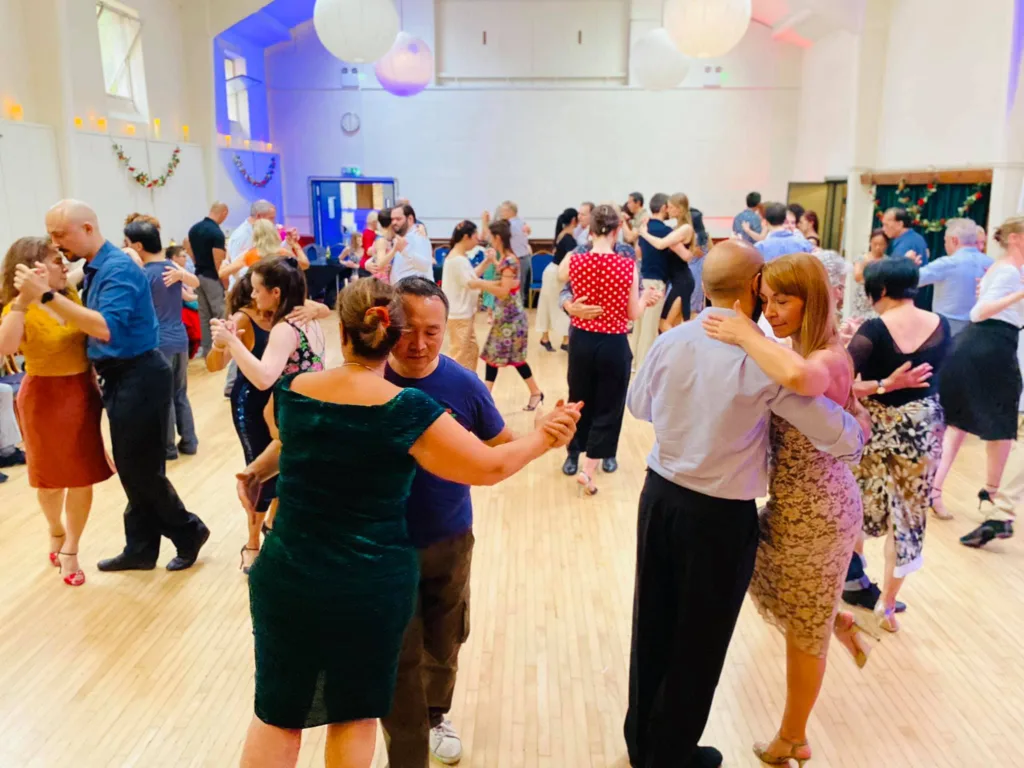
Q. Do I need to use the ‘cabeceo‘?
A.Most London dancers do use the cabeceo regularly. However, it is not universal. Practices often vary between venues and how well dancers know each other.
If you’re new to London tango, don’t worry too much about this. Most experienced dancers will understand that customs differ from place to place.
Q. Do London milongas have separate seating for leaders and followers?
A. No. Everyone mingles. And quite often, when you finish a tanda, the seat you were previously in may be occupied by someone else anyway.
Q. Do London milongas follow Argentine códigos?
A. While tango everywhere is influenced by Argentine traditions and social customs, London is not Buenos Aires.
Most London milongas will value:
- inviting partners by eye contact or a nod (cabeceo);
- entering the dance floor carefully;
- dancing counter-clockwise around the room;
- respecting the space of nearby couples;
- staying with the same partner for a tanda.
However, most London milongas operate with a relaxed approach and newcomers are not expected to know every traditional custom before attending.
The most important rule is – simply be considerate of other dancers.
Q. Will people invite me to dance?
A. We hope so. One of the attractions of social tango is dancing with a variety of partners.
That said, nobody is under any obligation to invite, or accept invitations from, anyone else.
Like any social activity, experiences vary. Some evenings are very social and newcomers quickly receive invitations. On other occasions you may need to take more initiative yourself.
Q. Can I attend a milonga just to watch?
A. Yes. Many venues welcome visitors who simply want to watch and experience the atmosphere. If you are curious about tango, but don’t feel ready to dance, spending an evening observing a milonga can be an excellent introduction to the community. However, it’s up to the organiser whether spectators can come in for free.
Q. Is London tango friendly to beginners?
A. Generally, yes. We all know what it feels like to be a beginner.
The London tango community includes a wide range of dancers, venues and teaching styles. Some milongas attract highly experienced dancers, while others have a reputation for being particularly welcoming to newcomers.
If you’re unsure where to start, consider:
- attending a beginner class first
- trying a practica
- arriving early if a milonga includes a beginner lesson.
Q. Can I eat and drink at a milonga in London?
A. Usually yes. Many London milongas are held in venues with licensed bars, or are in cafés or community venues that serve refreshments.
Drinking alcohol is acceptable – though inebriation is not. Tango requires balance, awareness and consideration of others. Most dancers drink merely water – and many /most venues will offer free drinking water.
It is not normal to bring your own food / alcohol – especially to venues where there is a bar. Given London venue-rental costs, events may only be sustainable if dancers buy refreshments on-site.
Q. How late do London milongas go on for?
A. We are not Buenos Aires. Even weekend evening events tend to end earlier than the small-hours of the night. Venue restrictions are normally the reason.
Some weekday practicas finish around 10pm.
Many weekday milongas continue until around midnight.
Weekend events often finish between midnight and 2am, and occasional special events continue even later.
Always check the individual listing for the most up-to-date times.